

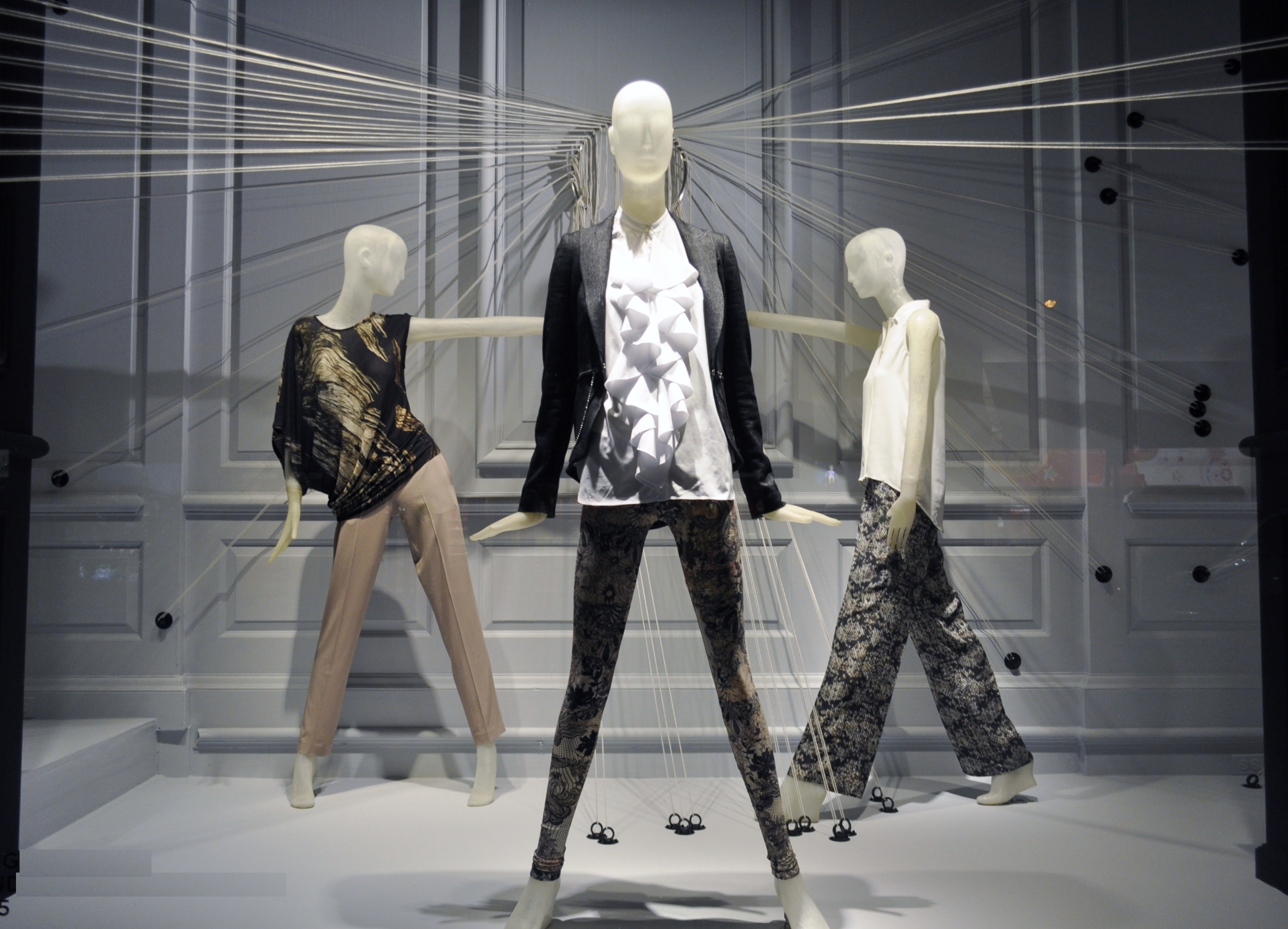
“Mannequins are simply part of the DNA of good store design and are here to stay. After all, when the consumer can see an outfit in three-dimensional form, touch it, feel it and envision how they would look in that outfit, you are far closer to a sale than if they simply see a sign, a two-dimensional graphic, a TV screen or monitor (Groeber, 2011).” So, the benefit to retailers of using mannequins is clear. But then, the first question that arises is: what types of mannequins to use? In the same way that we use an outfit for different occasions, diverse mannequins exist for helping display different merchandise. There are mannequins of different gender, sizes, colors, textures and poses. They can be full body or only a body part. Then, the second question is, what kind of store do you have? For example, let’s say that your store is a small boutique that sells elegant merchandise. So, your mannequins can have more humanistic, stylized and elegant looking poses. Another example is a store that sells athletic and sport merchandise. In this case, mannequins in athletic or sportive poses like running or walking will be appropriate for showing the merchandise and gaining the interest of customers that practice this lifestyle. Some links that we recommend to people in the retail business about mannequins are the following:
https://www.mannequinmadness.com/
https://www.storesupply.com/c-609-mannequins.aspx
https://www.palaydisplay.com/Mannequins-p-1-c-116.html
After looking different kind of mannequins, we can see that there are a variety of them that can be used depending on the type of store.
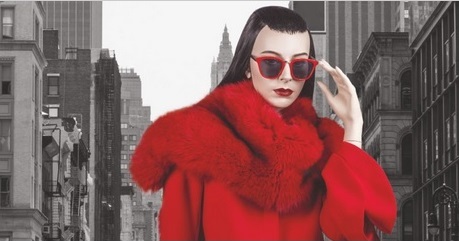
(Image retrieved from Google images)
I believe specialty boutique-style stores would use realistic mannequins, ethnic mannequins and futuristic mannequins. It depends what kind of specialty store this is. Customers can imagine how they will look in a certain outfit, just by looking at the mannequin. The genre and pose selected of the mannequin will depend on the type of specialty store and merchandise they sell. For example, if the brand is specialized in selling clothing and accessories for youth, babies or kids, then mannequins of those age groups will be selected. In the case of a jewelry store, partial body parts may be displayed, like hands to show rings or heads to show earrings. These highlight the merchandise and capture attention of the customer without the extra distraction of a full body mannequin.
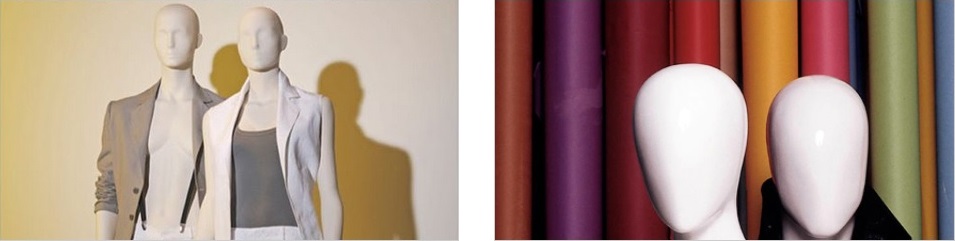
(Images retrieved from Google images)
In mass merchant stores, a variety of styles can be used, including basic mannequins, faceless mannequins, stylized human forms, abstract mannequins, and diverse body parts only. The mannequins can be reused to easily change display of the merchandise in the store. For example, stores that sells a big quantity of t-shirts, pants, socks, or pantyhose. The idea is to sell to masses so, the mass merchant should choose mannequins that are more general looking.
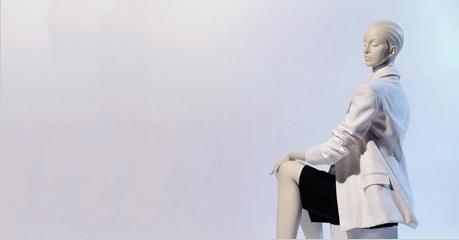
(Image retrieved from Google images)
Department stores can use mannequins that are more realistic, with traditional human forms or ethnic mannequins. This is because department stores are more focused on selling clothing than the mass merchant stores. They devote more budget to selling clothing and their customers are spending more on clothing as well. However, department stores, such as JC Penney or Kohls, also sell some household items like bedding, so they would not budget as much as a specialty store would for mannequins.
The following are recommendations for each type of store.
A recommendation for specialty stores is to have a clear concept of your brand and who your target is. If you specialized in sports, or in luxury clothing, then you must take into account what will be the best way to display your merchandise to capture your target without hurting your brand. For example, it will not make sense to choose mannequins that represent older people when most of customers are young people. On the other side, if your business doesn’t sell any sport merchandise, but the mannequins are in sportive poses, it will not help to promote sales.
A recommendation for mass merchant stores is to use simple mannequins that draw attention to the important items for sale and are versatile to be used for various types of displays. For example, use mannequins that can display both fall and winter clothing styles.
A recommendation for department stores is to use a variety of mannequins such as children, teens, men, and women to highlight each clothing section. But, it is more cost effective if the mannequins can be reused when the seasons change, and clothing styles change.
And a general recommendation is to consider the size of the store; when the store is larger you can use more of them than you could in a small store. But, it is necessary to put them in strategic places, like the windows and close to the merchandise you would like to emphasize for sale. It is necessary to check the lighting and the arrangement of the store. Consider the store from all angles. Find the focus point, because in some areas, the mannequin will not be appreciated as much as in other areas.
References
Groeber, Janet (2011). Personifying the Brand. National Retail Federation.
Retrieved from:
https://nrf.com/blog/personifying-the-brand
Hands Boodt Mannequins (2019). Retrieved from:
 EK Marketing Blog by Ericka Koehler