

(Image retrieved from: empxtrack.com)
- What is the difference between goals, strategies, and tactics?
Many times, we had heard the terms goals, strategies or tactics used as synonyms, but they are not. Confusion exists among people in business. Let’s see each of them in the business context. Business Goal: Goals are the broad primary outcomes towards which effort and actions are directed in a business. “They are whats, not hows” and a business might have multiple goals to achieve (Ghanbari, 2014). For example, “We must increase our sales and increase our customer reach.” A goal is not the same as a measurement. A goal only describes what they hope to achieve. Business Objective: Business objective differs from business goal in the sense that they are measurable and specific. It actually quantifies the thoughts and sets a target so that the strategy can be planned around it. In other words, objectives are measurable steps an organization takes to achieve its goals (Ghanbari, 2014). For example, “increase the number of first time customer purchases by 20% by end of the 2018 financial year”. Although business goals and objectives may seem similar, business objectives are a subset of business goals that are measurable and clearly defined. Business Strategy: Strategy is the organisation’s approach to persuade the customers to buy the products or services. “Strategy is how, not what.” On the other hand, strategy is the organisation’s approach to compete with other organisations to absorb more customers in order to achieve the objectives. It implies the marketing and advertising campaigns that are planned to attain the objectives (Ghanbari, 2014). “For example, convince the customers that our flying pet toy disk is unique and superior in the world of pet toys.”
- What is the importance of setting SMART goals when creating a marketing campaign? What questions should be considered?
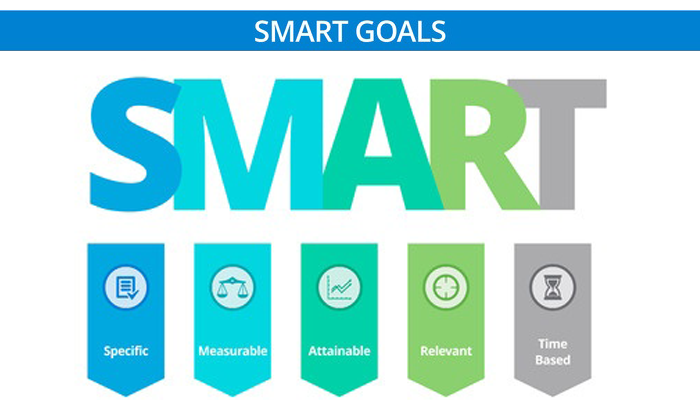
SMART goals are important when creating a marketing campaign because they are a tool to create criteria to help improve the chances of succeeding in accomplishing a goal (Esposito, 2015). SMART goals acronym meaning comes from the words “Specific – Measurable – Achievable – Relevant and Time-bound.” So, for “S” of Specific, we should ask ourselves the following 5 “W” questions: What do I want to accomplish?, Why is this goal important?, Who is involved?, Where is it located? and Which resources or limits are involved? (MindTools, 2018). For “M” of Measurable, we should ask ourselves the following questions: How much? How many? How will I Know when it is accomplished? (MindTools, 2018). Then, for “A” of Achievable, we should ask ourselves the questions: How can I accomplish this goal? and How realistic is the goal, based on other constraints, such as financial factors? (MindTools, 2018). In reference with “R” of Relevant, a relevant goal will respond “yes” to these questions: Does this seem worthwhile?, Is this the right time?, Does this match our other efforts/needs?, Am I the right person to reach this goal? and Is it applicable in the current socio-economic environment? (MindTools, 2018). Finally, “T” of Time-bound will usually respond to the following questions: When?, What can I do six months from now?, What can I do six weeks from now? and What can I do today? (MindTools, 2018).
- Provide examples to portray how marketing tactics align to strategies in order to support set goals.
Before doing strategies and tactics, we need to set out goals and objectives. A Strategy is a directed course of action to achieve an intended set of goals. A tactic is the means by which a strategy is carried out (Lumen Candela, 2018). Following are some examples of how marketing tactics align to strategies:
Goal:
Increase the number of first time buyers by 20% in fiscal year 2018.
Objectives:
Increase website traffic by 40%.
Increase purchases by previous customers by 25%.
Achieve an average purchase by first time customers of at least $30.
Attract 20% of new customers from different cities.
Example Strategy:
- Employ new advertising methods not previously used to reach new customers
2. Advertise in new cities online and on TV.
3. Target existing pet owners
4. Encourage first time customers to buy on their first visit.
Example Tactics:
1. Advertise on new websites.
2. Use Google AdWords and Radio commercials that target customers in new cities.
3. Use Facebook ads and YouTube commercials to target people interested in pets.
4. Offer savings to first time customers by signing up for emails.
- How can you ensure that your SMART goals are met using key performance indicators (KPIs)? Explain using examples to support your rationale.
You can ensure that your SMART goals are met using KPIs when marketing channels are tracking well toward company goals (SNHU-MKT 229, 2018). Some examples of KPI’s that can be evaluated to indicate campaign success are in Social Media. Using Facebook, you can measure average daily/ weekly/ monthly engaged users or average/daily/weekly impressions, then Twitter helps to know followers, mentions or impressions. The Content Marketing such as Podcasts helps to know how many downloads and comments were made. Direct Marketing like the use of E-mail Marketing serves to know Open Rate, Click-Through Rate and subscribers. Sales Promotions, serves to know the number of sales, sales dollars and cost per lead.
References
Charlie Said That Magazine (2016). Marketing Strategy vs. Tactics – Explaining
the Difference. Retrieved from:
Esposito, Emily (2015). The Essential Guide to Writing S.M.A.R.T. Goals.
Smartsheet. Retrieved from:
https://www.smartsheet.com/blog/essential-guide-writing-smart-goals
Ghanbari, Meysam (2014). Business Goals vs. Objectives vs. Strategies vs. Tactics.
Linkedin. Retrieved from:
Lumen Candela (2018). Reading: Strategy and Tactics. Retrieved from:
https://courses.lumenlearning.com/cochise-marketing/chapter/reading-strategy-and-tactics/
MindTools (2018). SMART Goals – How to Make Your Goals Achievable.
Retrieved from:
https://www.mindtools.com/pages/article/smart-goals.htm
Southern New Hampshire University – MKT 229 (2018). Getting Start with KPI’s.
Module Three. PDF document. Retrieved from:
 EK Marketing Blog by Ericka Koehler